
How The Truman Show Fooled Us All

Imagine if your whole world was a lie. If everything you ever knew was fake and created with the sole purpose to entertain others. Let me introduce you to Truman Burbank, an insurance salesman in his early 30s who’s completely oblivious to the fact that every second of his life is being broadcast live to the entire world.

The Truman Show is set in the small, charming town of Seahaven where we watch our protagonist living the perfect life. Perfect job, perfect friends, perfect family – every aspect of the Show is flawless, scripted to portray something unreal, out of a fantasy. The truth, however, is much darker and far from being perfect. All friends and relatives who seem to be “always there” for Truman, in reality, are just actors with different roles to play and countless lies to tell. Clueless as to why everything is always ideal, Truman becomes bored with how static and predictable his life is. As he tries to get away from Seahaven, there always seems to be something to stop him. When suspicions arise and Truman begins to understand the unthinkable truth, he does everything in his power to escape the artificial reality and regain freedom over his life.

The Truman Show is one of those movies that was way ahead of its time when we look at it from today’s perspective. In the modern world where reality TV and social media play a crucial role in shaping our culture, Truman’s story is no longer a Sci-fi movie but a terrifying reminder to us all. “We’ve become bored with watching actors give us phony emotions, retired of pyrotechnics and special effects”, says the director, magnificently played by Ed Harris, in the opening scene. “There’s nothing fake about Truman”, we hear.

Now we have numerous reality TV shows to choose from. We get to watch the ordinary lives of ordinary people and spy on their every move. The boundary between public and private life has become vividly fragile, as social media allows people to carelessly invade each other’s privacy. Watching Truman’s daily endeavors, we unconsciously become a part of the worldwide audience that scrutinizes him and watches his every step. That’s when the movie becomes real, revealing the filthy truth about social media that somehow never ceases to control our lives. It turns out that we are all Trumans in a way – trapped inside our own “false reality”. Now, it depends on us whether we’ll accept that or swim against the tide and refuse to be falsely perceived through the lens of others.
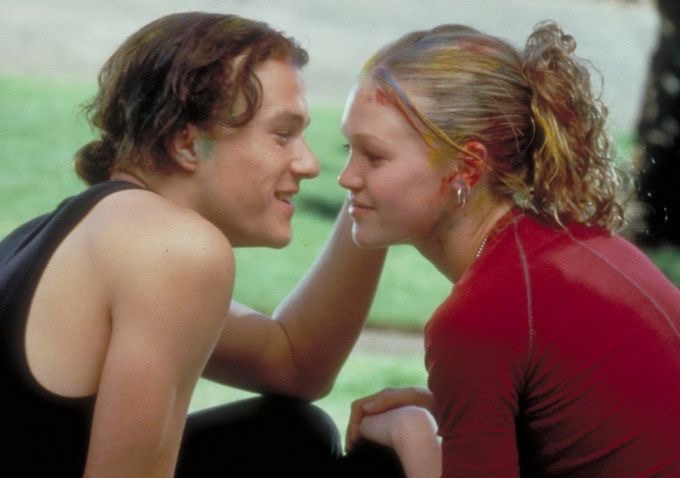
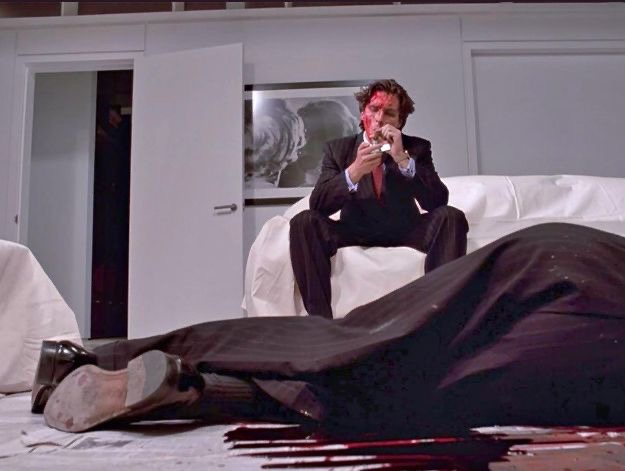
10 Things I Hate About You And Everything Modern Movies Are Not

Drugs, hardcore partying, and sex – these are typically the things that come to mind when thinking of modern teen life portrayal in movies. On top of that, all characters must be unrealistically attractive and preferably played by actors at least twice their age.

Looking back at teen movies from the 90s or early 2000s and comparing them with the ones we watch today, it becomes apparent that the movie industry has drastically changed over the years. The image of a ‘troubled teen’ who’s underestimated by society has evolved and reached a new meaning. To stand up for themselves and fight against conformity they turn to alcohol and drugs in an attempt to escape the pressure of constantly being in the public eye. Shows like Euphoria or Elite are perfect examples of such portrayals, where characters, faced with drug abuse, bullying, or sexual violence, quickly end up losing control over their actions and causing mayhem as they do so.

What happened to those high school movies of our past? To the teenage rebels, we once wanted to be? To answer that question we’ll have to go back in time and take a closer look at a story that started it all. 10 Things I Hate About You is a romantic comedy featuring the life of Kat Stratford, a teen feminist who loves rock and takes pleasure in ‘destroying’ just about any guy that comes in her way. Little does she know, that the infamous Patrick Verona, the male equivalent of Kat, has already set his eye on her and is about to turn her teenage world upside down.

Kat and Patrick are rebels in every possible way. They both share a bad reputation. They’re both alienated by their community and they’re both ‘built differently’. Yet, the most rebellious part about their behavior is that they’re not afraid of being themselves and speaking their truth whenever they have to. Instead of daydreaming about boys, Kat spends her free time reading feminist prose and doing the things she truly loves without worrying about her image. The same goes for Patrick and the notorious aura he has surrounded himself with.

Even after 20 years, 10 Things I Hate About You remains an adequate depiction of that teenage desire to rebel against the pressure to fit in. The characters express their disapproval by not giving up on their beliefs and challenging society to accept them as they are. The movie subtly displays the frustration of being misunderstood by the people around you and reveals the complex reality behind being a teen in a simple, yet captivating way.

So why has that portrayal changed so much? Is this really how the youth is perceived today? Fighting against conformity with recklessness and rage? As the world keeps expanding at a rushed pace, our fantasy of teenage life continues to transform. The forbidden fruit is what the audience now craves. The parties, the sex, and the alcohol are all just a tool to create an unrealistic plot that’s filled with drama and complicated issues. The teens we watch on screen are no longer the relatable kids with regular lives, but their unrealistic versions created with the sole purpose of entertaining the audience. Although it may seem upsetting now, let’s not lose all hope. ‘Ordinary’ rebels will come back one day and remind us what’s it like to be a teenager all over again.

The dreadful truth behind American Psycho

As a stereotypical human being during Halloween, I decided to watch a good old horror story which turned out to be (surprise surprise!) American Psycho. Halfway through the movie, I came to some mind-striking conclusions and realized that the apple doesn’t fall far from the tree. Each one of us is in a way Patrick Bateman – putting on a mask and simply, trying to fit in.

The main character Patrick Bateman, played by Christian Bale, is a wealthy investment banking executive who hides his diabolical nature under a thick layer of narcissism and obsession to become one’s perfect self. Batman goes through a series of rigorous routines to attain his appearance and physique. The iconic scene with the face mask is when Patrick himself realizes that what he’s doing is not maintaining his attractiveness but shielding his innate monstrosity.

Killing is for him the only way to let go of this false image and express disgust toward those who don’t reach his expectations. As the plot unfolds Bateman becomes more and more impulsive and driven solely by his instinct to kill. Finally, the story reaches its peak when Patrick confronts his lawyer after confessing to multiple murderers. He desperately needs someone to stop him. Bateman’s lawyer, however, completely ignores the madness deriving from his confession and lets him go. It then becomes clear to him that escaping consequences is so easy because of the society he’s surrounded with. A society that’s so wrapped up in its own falsehood, in the desire to “fit in”, that it becomes immune to any signals and callings for help.

Now, we live in a world where it’s so easy to create a fake persona. With social media on the board, it’s becoming extremely difficult to stay truthful to oneself. Rushing to meet our often unreachable expectations we start slowly descending into madness, trying to become someone we‘re not but crave to be.

That’s when the movie becomes a lot scarier. 22 years later, American Psycho is still adequate to how our society is shaped, warning us how deceitful our human instincts and desires can be. The culture of influencers and celebrities that has evolved over the years strongly reflects the issue portrayed by Bateman’s character. American Psycho doesn’t seem so far-fetched after all.

Design a site like this with WordPress.com
Get started