“Past Lives” on How Fate Narrates Human Relationships

Have you ever met someone feeling as though you’ve met them before? The way your first encounter seemed oddly familiar, almost nostalgic. A stranger who’s also a long-lost friend. Or maybe an old lover – lost yet not forgotten. It doesn’t always make sense to feel connected to somebody in such a way, which prompts us to wonder – what fuels this strange sense of familiarity? Are some humans simply destined for each other? Or perhaps they’ve already met each other in a parallel reality, now reuniting under different conditions and circumstances?

Luckily, the Korean concept of “Inyeon” provides an answer. When translated into English, “Inyeon” literally means “destiny,” but this single term fails to fully encapsulate the essence of what “Inyeon” truly means. The idea of “Inyeon” suggests that human relationships are a consequence of the complex interplay between us, individuals, and the laws of the universe that dictate our past, present, and future. Each person we encounter on our path happens to be there for a particular reason, serving a particular purpose.

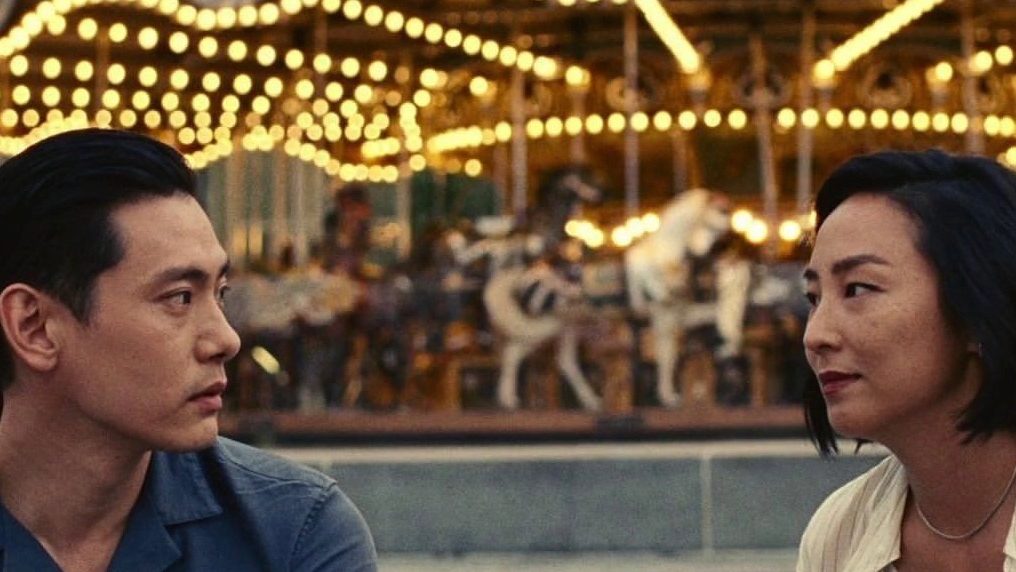
This exact idea is examined in the movie “Past Lives,” directed by Celine Song, which tells the story of two high school friends who abruptly lose contact only to reunite 12 years later. The protagonist, Nora Moon, is introduced as a promising writer in New York, living her high school fantasy. One day, while mindlessly browsing through social media, she comes accross the Facebook profile of Hae Sung – the dear high school friend she had left behind in Korea. She realizes that he had been looking for her and immediately decides to leave him a message. They promptly reconnect through Skype, and end up regularly engaging in video calls, talking for hours, despite the significant time difference and kilometers separating them apart. The euphoria of two long-lost friends reuniting quickly fades, as they confront the reality of a relationship confined solely to a virtual image on the screen. As a result, it becomes increasingly difficult for both parties to communicate, as they find themselves unreachable, unavailable, unable to meet in “real life”. Nora quickly realises that her growing desire to see Hae every day is distracting her from work and decides to temporarily halt her contact with Hae. Little does she know, however, that their relationship will resurface years later upon Hae Sung’s visit to the Big Apple.

The scene when the two characters meet is captured as seconds of pure silence and shared smiles, conveying something no words could ever reveal. The suspence is breached when they fall into each other’s arms and then, after a long pause, proceed to aimlessly wander around the city, talking. They learn about each other’s partners and eventually, Hae Sung ends up going to dinner with Nora and her American husband. Initially, the conversations between all three unfold in English, but later they exclusively switch to Korean. After hours of talking Hae apologizes to Nora’s husband for excluding him from conversation and asks him if he’s familiar with the concept of Inyeon. When all three go back to the protagonist’s apartement, Hae Sung realizes he has to return to the airport. At the last minute, Nora decides to accompany him to his cab to say her final goodbyes, leaving the husband behind. They walk together side by side, smiles wiped off their faces when, after a long pause, Hae Sung breaks the silence – “What if this is a past life as well, and we are already something else to each other in our next life.” With those very words he finds acceptance, and reaches the closure he’s needed to move on and accept the fact that their paths will likely never cross again. After Hae Sung’s cab departs and his striking words reverberate in Nora’s mind, she returns to her husband and instantly breaks into tears. Her heart broken, yet at the same time, flourishing with love in one of her past lives.

The story of Nora Moon and Hae Sung, is the story of love that survives the test of time. Despite saying their goodbyes on multiple occasions at different points in their lives, they never truly parted ways. Their lives are connected through “Inyeon.” It’s an unconventional story of love that writes itself – through the unlived memories from the past that resonate in the present, connecting two seemingly random souls. The ways of life are unknown to man, but perhaps the ways of love are even more mysterious. Thinking of human relationships as an intricate web of shared memories and experiences, blending together in a specific reality, crafts a beautiful narrative that seems to resonate so deeply with us and our concept of “fate.” Destiny works in the most incomprehensible way – it supplies us with things we never asked for, things that despite their seemingly arbitrary and unsolicited nature, have a strong impact on our lives, leaving a lasting, unerasable presence. Time passess, people change, yet the memories we harbor in relationships remain – writing the closure of one chapter, and the begining of the next.

“In the Mood for Love” and the Beauty of What Is Left Unsaid

It is often said that actions speak louder than words. Maybe that’s because humans are rather straightforward creatures. We have an affinity for the observable and physical – what can be seen with our bare eyes, or felt with touch, appears to us as the ultimate source of truth. “It’s reliable because I saw it,” we think, “It must exist then.”

Yet, is that the only reason? Can it be that the things we encounter on a physical level engage our senses, and thus, carry a greater emotional impact? After all, without a proper gesture, even the most powerful words become mere words – devoid of their purpose and meaning. We say “I love you” to our loved ones to convey a profound message, yet without physical affection, without accompanying actions that reveal our true feelings, these eight letters and three syllables seem to lose their power.

There’s some inexpicable beauty in that physicality. These gestures, universally understood, transform our human emotions into something tangible, genuine, and deeply experienced. Sometimes, the most profound messages can be conveyed without uttering a single word. The symbolism of a smile, a held hand, or a brief exchange of glances can be enough to convey what is meant to be shared. Unspoken emotions have no firm definitions and infinitely many meanings – that’s what makes them so beautiful.

This idea is the essence of the movie “In the Mood for Love”, directed by Wong Kar-wai, which tells a story of two neighbors who happen to form a deeper connection upon discovering their spouses’ infidelity. When we’re introduced to the protagonists, Mrs. Chan and Mr. Chow, we learn that they live in the same apartment buidling in Hong Kong. Their initial interactions are polite but distant, restricted to occasional chit-chats and courteous remarks about each other’s spouses. Although we never get to meet their partners throughout the film, we develop certain impressions about them through the perspectives of Mrs. Chan and Mr. Chow. These impressions are crafted through their dialogues and the way they are depicted in the absence of their significant others. We observe Mrs. Chan as she regularly visits the nearby restaurant to buy takeout, explaining that “she doesn’t feel like cooking for just herself”. In a parallel scenario, we watch Mr. Chow collecting his wife from work on multiple occasions, each time discovering that she has, once again, left early without telling him where she had gone. Though they’re both lonely, neglected by their loved ones, they appear unaware of each other’s pain – until their paths cross one day in the narrow corridor of a nearby restaurant.

From that moment forward, we see them frequently passing each other in that very same narrow corridor – no words, no facial expressions, just exchanged glances and turning heads. That very scene marks a pivotal moment in the plot when the main characters’ interaction transcends beyond the level of mere shallow conversations between two neighbor passersby. The close proximity, the fleeting stares, the moments of hesitation – all these unspoken emotions seem to resurface in that cramped restaurant corridor, revealing the bustling intimacy between the characters, each filled with an unfullfilled desire for the other. As their yearning and affection for one another intensify, they start meeting up in secret, to avoid raising any suspicions in the neighbourhood. They unveil their vulnerabilities to each other, reveal their suffering, the feelings of betrayal and deceit, all while wrestling with the sadness of holding onto the love they once had in their marriage. Mr. Chow and Mrs. Chan promise each other that they will never follow in the footsteps of their spouses – they will never commit betrayal. Consequently, as their feelings for each other strengthen, they uphold their promise – their love remaining unconsummated. This complicated relationship of restraints and secrecy reaches a brutal end when they both secretely realize that they fell in love with each other – thus, unintentionally breaking the promise. Their ways part when Mrs. Chan decides to leave for Singapore to reunite with her husband and Mr. Chow, with a heavy heart, remains behind before ultimately moving on with his life and starting anew in Cambodia. The very last scene of the film portrays Mr. Chow visiting a Cambodian temple, and whisphering something into a hole in the temple wall before sealing it with clay. Still no words – just gestures and symbols, leaving the audience to ponder.

“In the Mood for Love” is a story about the unspoken beauty that’s hidden in subtle gestures and silent intentions that are never verbalized but felt deep at heart. This beauty lies in the unfulfilled love that flourishes between two lonely people just yearning to be loved. Their relationship is like that narrow corridor where their love story began. Each time it seems they are close to expressing what they truly feel, on the verge of bridging the gap between emotions and reality, somehow they still remain distant, passing each other by. As we watch the protagonists trying to recreate the roles of each other’s spouses, we witness the tension building up between them – the unexpressed passion, desire, and the inability to voice what truly yearns to be said.

The story of these two unravels the intricate nature of human relationships that lies in our inability to express true intentions and convey with accuracy what is kept hidden at heart. Love is an universal human experience that reflects our desire to be understood without the need for words, reaching a certain depth where even the simplest of human interactions appear intimate. After all, how can something as complex and powerful as love be restrained to mere words? It’s in the gentle touch of a hand, the warmth of a smile, the encounter in a narrow corridor. Despite Mr. Chow and Mrs. Chan never openly declaring their true feelings to each other, never uttering their “I love yous,” their unspoken love remained, reverberating through temple walls – a secret whispered and sealed in eternal silence.

“Gone With the Wind” and On a Quest for Love

“What is love?” is a question posed by many. We all experience it at some point in our lives. It’s a universal emotion that transcends cultural, linguistic, and generational barriers. No matter who you are and where you live, you can recognize it immediately – the butterflies in the stomach, the quickening heartbeat, the “electricity” – it’s all part of the same package. Yet, despite our shared perception of how it generally feels, we seem to understand love differently. Some associate it specifically with people, and their romantic affection for one another, while others view it on a broader spectrum, linking love to the inner appreciation for higher ideals such as faith or patriotism, deeply rooted in one’s sense of being.

Thus, love can take many forms, making our search for it a bit confusing. Some emotions may feel like love and look like love, while in reality, they aren’t. As a result, we find ourselves running in circles, blindsided, trying to deduce what’s true and what’s not. This is, in part, a product of the ongoing “idealization of love” which has set unrealistic standards, leading on generations of miserable and hopeless romantics. In movies, love was often portrayed in its simplistic form – I’m talking about the predictable, fulfilled, and rational kind of love that reaches a happy ending and wins against all odds. Though it may seem appealing or intoxicating, it has nothing on the intricate, irrational love that comes unexpectedly. There’s some inexplicable beauty in this rough, unfiltered emotion that showcases the true complexity of our human nature and the innate desire to “love and be loved”. Certain movies explore this theme, serving as truth excavators that cause us to pause and reflect for a while, often reshaping our perception of love.

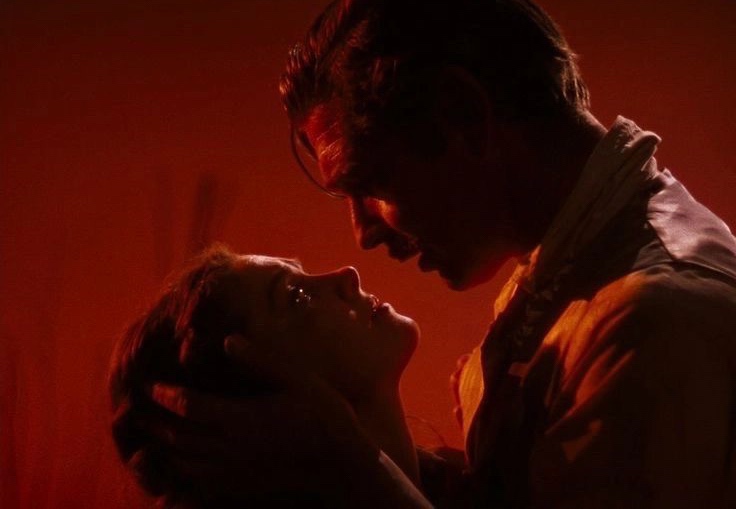
“Gone with the Wind” is a classic from the 1930s that debunked love’s conventional image by telling the story of a young woman who fell hopelessly in love with a “taken” man. Scarlett O’Hara, starring Vivien Leigh, is introduced as a charming and charismatic “coquette” who effortlessly draws the attention of both men and women, quickly learning how to use it for her own advantage. Scarlett is a character unlike any other. Being the “desirable” daughter of a wealthy plantation owner, she knows how to utilize her power – she knows what she wants and she most certainly knows how to get it. She’s both determined and skilled at achieving her goals, even if it means flirting with men in relationships or risking coming across as “daring”. Nonetheless, it quickly becomes apparent that there is one particular vulnerability in Scarlett’s flirtatious demeanor. She’s in love with Ashley Wilkes – the one man she knows she could never have. Despite openely declaring her love to Ashley, he doesn’t reciprocate her feelings, leaving Scarlett with a sense of futile hope for the future. Her sorrow only deepens as the Civil War unfolds, and the man of her dreams departs for the southern front. The only person who’s aware of Scarlett’s secret feelings happens to be a wealthy Southern gentelman named Rhett Butler, played by Clark Gable. The moment he lays his eyes on the protagonist, he firmly decides to win her heart and aid Scarlett in “recovering” from her unrequited love for Ashley. Rhett sees a part of himself in Scarlett – she’s stubborn, confident, rich, and determined to get what she wants at all costs. “We’re very much alike my dear” he says to her. After the breakout of the war, Rhett professes his feelings for Scarlett and then too departs for the southern front. As the young, courageous woman she was, she takes charge of her family land, the beloved “Tara,” and sets out to confront her own “battles”. Facing a multitude of challenges, from her father’s death to a Yankee attack, Scarlett undergoes personal growth, eventually emerging as a mature, self-aware woman. After her father’s passing she decides to take special care of Tara, continuing her family’s legacy. “As God is my witness, I’ll never be hungry again”, she cries out, standing in the midst of the field. Despite all these hardships and her personal growth, Scarlett continues to hold onto the belief that Ashley will stand by her side one day, in Tara, once the Civil War comes to an end. Striving for that utopia, she loses Rhett – the only person who truly saw Scarlett beyond the rich, flirtatious persona she was known for in the higher circles. Moreover, she loses her idealized image of Ashley when he eventually confronts her, stating, “You’re so brutal to those who love you, Scarlett. You take their love and hold it over their heads like a whip.” At this very moment, she realizes that the feelings she felt for Ashley were just an illussion. She wanted for someone to love her truly, someone willing to make sacrifices on her behalf, someone who would dedicate their entire life to her. She yearned for the profound, romantic love of life-long commitments and sacrifices, and at the end she was left with none.

As she realizes that she made the wrong choice, she decides to return back to Tara – “Tara! Home. I’ll go home. And I’ll think of some way to get him back!”, she exclaims, as it dawns on her that Rhett Butler, the man she had left behind, was the one who truly loved her, just as much as she had thought to love Ashley.

“Gone with the wind” is a beautiful story that reveals different forms from which love emerges. It touches on the subjects of fatal love (the one that’s doomed from the very beginning), romantic love (the oned that’s often blind and results in a tragic ending), and the true love (the one that remains there against all odds, and never fades away). Some might say that the film ends in a very unambiguous way, revealing who Scarlett O’Hara truly loved from the start. Yet, to me the final words we hear from Scarlett are always striking. “Tara! Home. I’ll go home.”

The last thing that remains for Scarlett is Tara. It’s the place she promised to protect during the war, to take special care of it, and in the end, it takes care of her. After all, Tara was a part of her identity all along – it was a symbol of who she was, what she achieved, what she hoped to cultivate. Hence, when someone asks me, “Who do you think was Scarlett’s true love?” I simply say, “Tara.”

Design a site like this with WordPress.com
Get started