
“Anora” and the Difficult Depiction of Sex Workers in Hollywood

Hollywood has a long history of distorting reality. Tropes and stereotypes that shape our culture are often amplified through film, eventually becoming deeply ingrained in our collective consciousness. For instance, we tend to picture a cop as a chubby middle-aged man, donut in hand, even if we’ve met many cops who don’t fit that stereotype. The same applies to countless other professions, with some stereotypes being relatively harmless while others having far-reaching consequences for how individuals are perceived and treated by society. This is especially true for marginalized professions, such as sex workers, who have endured decades of reductive portrayal in film and media.

For most of cinematic history, prostitutes were portrayed as mere accessories to the storyline, acting as “props” rather than fully developed characters with personalities or perspectives worth considering. In movies like The Wolf of Wall Street or American Hustle, sex workers serve as a symbol of the rich’s debauchery and their morally corrupt, lavish lifestyles. They appear alongside gangsters, scammers, mobs and other than serving a purely aesthetic purpose, they contribute very little to the actual narrative. Although centering a prostitute in the storyline is relatively rare, some films have attempted it in the past, with Pretty Woman being perhaps the most well-known example. In many of these cases, however, the narrative feels overly glamorized, glossing over the real hazards and challenges associated with sex work. Notably, these stories often hinge on the trope that a sex worker is someone in need of salvation, typically through male intervention—much like Vivian (Julia Roberts), who is “saved” by Edward (Richard Gere), through whom she enters a new class of living and escapes social ostracism.

Nobody has yet given much thought to portraying a story primarily through a sex worker’s lens—revealing both the glamorous and the ugly—or has given them enough autonomy to voice their reason for choosing that profession in the first place. Nobody until last year’s Cannes nominee for Best Picture, Sean Baker. Anora premiered in November 2024 and, in just over a month, has already claimed the Palme d’Or at the Cannes Film Festival (the first American film to do so in two decades) and captivated audiences worldwide—so much so that it is widely expected to be this year’s Oscar nominee for Best Picture. Although critics are divided on the film, it has undeniably stirred the pot, offering a compelling perspective that, it seems, the silver screen hasn’t seen yet.

Anora is the stage name of Ani, a 23-year-old stripper and the protagonist from a working-class neighborhood in Brooklyn. Between performances, the audience sees Ani smoking outside the club or eating lunch backstage during breaks, going about her day much like a regular office worker. During the first quarter of the film, the audience gets a clear sense of Ani’s work ethic as she takes the initiative—actively “hunting” for clients and prioritizing the prospect of earning more money, even if it means occasionally stealing clients from her coworkers. When the club manager informs her about a high-profile Russian client, she quickly sets herself to the task, and before she knows it, she is swept into an insanely rich and extravagant lifestyle. She immediately grows attracted to the idea of reckless money spending—on designer clothes, lavish parties, trips to casinos, and other upper-class expenses. Ani’s ultimate downfall, however, lies in her misguided belief that the opulent lifestyle she has become part of will “save” her from her economic and social struggles. When Vanya, her client and the son of a Russian oligarch, asks Ani to elope, she believes she has achieved every girl’s dream—found her prince who will provide her with the life she truly deserves. Yet, as the story progresses, Ani realizes that her Prince Charming is not so charming after all. When his family quickly arranges an annulment of their marriage, Vanya passively accepts their decision, turning his back on Annie and shattering her illusions once and for all.

The final scene of Anora is a pivotal moment that earned the film both praise and criticism. It depicts Ani and Igor, the henchman sent by Vanya’s parents to handle the annulment “issue,” sitting together in a car parked outside her house. This moment unfolds after Ani’s marriage to Vanya has been annulled and she is forced to return to her modest middle-class life. Unlike the other men in her story, Igor displays genuine sympathy toward Ani. He carries her bags to her apartment and, before leaving, hands back her wedding ring. This simple but unexpected gesture profoundly affects Ani, as it contrasts with the transactional and exploitative behavior she has grown accustomed to from men. Unsure how to respond, she attempts to initiate intimacy with Igor, as sex is the only form of male-female connection she has ever known. However, Igor refuses to take advantage of her vulnerability, leaving Ani in a moment of emotional reflection and self-realization. She breaks down, trembling, screaming, and clinging to him in tears.

There are a couple of ways to interpret this scene. One interpretation, particularly favored by critics, is that Ani’s breakdown reflects the psychological toll of being constantly objectified and reduced to a mere object of sexual desire. Ani is unaccustomed to any kind of connection with a man that doesn’t involve being objectified or exploited, which ultimately leads to her downfall when someone outside the corrupt, wealthy “man’s world,” like Igor, offers her the possibility of a genuine connection. At this point, Ani is no longer such a distant character to the audience—her struggle and desire to be loved become universal and relatable to many women who built their ideal of love on fairy tales about damsels in distress and knights in shining armor.

In one of the press tour interviews, Sean Baker explained the vision behind his creation of Anora, addressing the predominantly one-dimensional portrayal of sex workers in cinema that has persisted over the years. “My whole goal is to do the opposite—to create fully fleshed-out, three-dimensional characters that audiences can connect with and see themselves in.” Judging by the reception Anora received, it’s clear that Baker managed to achieve his goal.

While the film has drawn both criticism and praise, there is no denying that Baker’s approach to demystifying sex work in film is clever and unique. Rather than romanticizing, glamorizing, or condemning the life of a stripper, he presents Ani as a deeply human character, gradually revealing her vulnerabilities and making her relatable to the audience. Over the course of the film, Ani begins to emancipate herself, realizing that her Prince Charming is a fantasy and the opulent lifestyle she once desired is nothing more than an illusion.

I must admit, when I first watched Anora, I wasn’t entirely sure how I felt about it. However, after letting it sit with me for a while, I began to grasp the deeper implications it carried. It’s refreshing to see films like this that challenge the male gaze and bring more nuanced, authentic perspectives to the screen. In a way, it makes me hopeful about similar films in the future, which have the potential to dismantle the stigmas they once helped create and replace them with universal themes that audiences from diverse communities can relate to.

Legally Blond and the Toxic Legacy of Academic Validation

In my junior year of high school, I became obsessed with the idea of college. I religiously binge-watched college acceptance reaction videos on YouTube, with people screaming, crying, and hyperventilating as they opened their admission results. Their intense reactions, as though their futures hinged entirely on that single moment, left me both excited and somewhat anxious, knowing that one day I would be in their shoes. I was convinced that once that day arrived, it would change my life forever.

After all, the idea that college predetermines the trajectory of one’s life is anything but new. For decades, society has perpetuated the belief that higher education is the ultimate gateway to success. As early as ancient times, people in positions of power and privilege had access to education, while women, slaves, and impoverished citizens were systematically excluded from learning. In today’s democratic world, education is widely recognized as an inherent human right, granting every individual the basic right to learn, regardless of their status, gender, or race. Yet, the concept of elite education is still very much alive, as private institutions continue to provide exclusive education, highly coveted by modern society. The image of private education as prestigious and aesthetically appealing is heavily reinforced through pop culture, especially through the Western cinematic universe, which encourages young target audiences to aspire to the glitter and gold of elitist learning. 

Legally Blonde is an undeniable classic that has brought up generations of aspiring female students to pursue their dreams of studying at Harvard or other Ivy League institutions. The protagonist, Elle Woods, is introduced as the quintessential “dumb blonde”—carefree, always dressed in pink, and primarily preoccupied with fashion, boys, and gossip with her sorority girlfriends. Elle’s boyfriend, on the other hand, embodies the wealthy golden boy stereotype—privileged, attractive, and entitled, with no real ambitions of his own other than fulfilling his parents’ expectations, which include attending an Ivy League school, particularly the one his relatives had attended. When he breaks up with Elle to pursue Harvard Law School, Elle decides to apply to Harvard Law as well, hoping to get in and win him back. She manages to earn a perfect LSAT score, and despite everyone—including her guidance counselor—insisting that she doesn’t stand a chance of getting into America’s most prestigious and selective law school, she ultimately gets admitted.

All odds stood against Elle—she comes from a middle-class family, lacks any outstanding achievements beyond her passion for fashion and her impressive LSAT score, and most certainly does not fit the standard profile of an elite candidate. Yet, she still gets admitted. What’s even more extraordinary is that she neither yearns for nor fully realizes the privileged situation in which she finds herself. “What, like it’s hard?” to quote the classic, when met with scrutiny about her admission to Harvard. While Elle’s character was largely glamorized through the early 2000s and epitomized as the ideal of a modern woman—beauty and brains, success and style—she also coincidentally became a sort of fictional utopia, perpetuating a toxic outlook on college among new generations of female students. Although Elle’s story is framed as one of female empowerment and the challenges of succeeding in a male-dominated field, her journey is largely driven by an underlying need for social validation. She attends Harvard to gain validation from her boyfriend and finds her academic drive in the scrutiny she receives from her peers and professors. The same cause seems to be the underlying motif for modern-day youth applying to college—social validation stemming from the idea that fulfilling societal expectations will lead to recognition and a broadly defined notion of success.

The most problematic aspect of Elle’s story, however, is that it has convinced us that truly anyone can follow in her footsteps—that achieving success is simply a matter of making lemonade from the lemons life hands us and that it’s not “hard” after all. She makes us believe that, ultimately, it’s practically up to us whether we get accepted or not—because if a regular, middle-class girl can get into Harvard, then surely I can too?

The truth is that a regular girl’s chances of getting into her dream elite college are quite slim, even with a near-perfect SAT score. This is not only due to the academic legacy many elite colleges endorse—favoring the children of donors or alumni—but also because of the meritocratic system that underpins the college application process in most Western nations, particularly in the U.S. In his book The Meritocracy Trap, Daniel Markovits, ironically a professor at Yale Law School, argued that American meritocracy has served a role opposite to its intended purpose. Instead of giving people the opportunity to be recognized for more than their social affiliations and wealth, it has shifted to focus on academic merit—grades, scores, records—which remains largely dependent on resources and opportunities exclusive to a particular subgroup of higher-class students. This is reflected in the disproportionately high admission rates of wealthy students into Ivy League schools and the evident correlation between socioeconomic status and SAT scores. Harvard economist Raj Chetty found that students from families in the top 1% of income are 77 times more likely to attend an Ivy League school compared to students from families earning less than $30,000 per year. A different 2012 study conducted by researchers from the University of Minnesota found that approximately one-fifth of the differences in SAT scores can be directly attributed to socioeconomic factors—parental income, education level, etc.

This demonstrates that the fundamental flaw does not necessarily lie in elite, private universities themselves but rather in the educational system as a whole, which consistently favors those with greater access to resources and opportunities—such as the ability to take multiple SATs, hire private tutors, participate in elite sports, and engage in other activities that ultimately make a college application appear more competitive and worth considering.

As I watched these college acceptance videos on YouTube, with entire families breaking into tears of joy or anguish, I noticed one thing—they were all living the same dream of achieving success in a system that is inherently rigid and destined to fail them. Till the very last moment, they seemed to believe they would have their Elle Woods moment—a triumphant breakthrough against all odds—only to be fooled by a system that perpetuates inequality under the guise of fairness and opportunity. The weight of pressure placed on modern youth to excel academically is undeniably harming today’s generation of students, fueling an artificial competition, in which success and self-worth are inextricably linked to academic validation.

Perhaps, Legally Blonde is just a harmless comedy for teenage girls, or perhaps it has planted this toxic belief that elite education is attainable for all in exchange for academic merit. However, it is also fair to say that the story of Elle Woods has taught us something important. While she may be driven by academic merit and the need to fulfill societal expectations of a successful woman, her story of a regular girl getting admitted to Harvard, in a way, also brings hope and light in difficult times. Though it may be utopian, for decades it has offered a comforting narrative that has made the pressures of meritocracy feel somewhat more endurable.

Meritocracy will continue to permeate our system, but acknowledging its inherent flaws and refusing to let it dictate our self-worth or define success in the modern world is the ultimate way to remain sane. To all the students waiting for their admission results this year, I wish you all the best and sincerely hope you get into your dream school—whether it’s an Ivy or not—and that you have your very own Elle Woods moment! Just remember, don’t cling to the idea that your worth or likelihood of success in life is defined by where you get accepted or where you end up going! College may be a stepping stone in your life, but it is most certainly not the sole determinant of your value as a person, student, lawyer, entrepreneur, or whatever you choose to become in the future.

Disclaimer:

Happy 2025! As you may have noticed, I haven’t been actively posting for a while. The truth is, much like most aspiring Elles, I had to focus on my college application process, which unexpectedly kicked off for me last year. It’s been quite a ride, but now that I’m almost done, I plan to stick around and post more regularly! That’s my resolution for 2025, at least…

Stay tuned and keep your fingers crossed that I get admitted somewhere!

Cheers!

Modern Womanhood & Love in a Big City – What “Sex & the City” & “Emily in Paris” Got in Common

There’s something particularly alluring about the vibrant and hectic nature of a big city. Whether it’s the sociocultural diversity or the invigorating dynamic of people always rushing somewhere, restless to get something done – the big city is a truly peculiar place. People from all walks of life come into the city to achieve their dreams, their ambitions and become the better version of themselves – one that surely wouldn’t come to life in a rural or suburban setting. Consequently, the city becomes a melting pot of contrasting beliefs, thoughts and ideals that make up its liberal and exuberant nature.

Especially in Western cultures, a big city has always been synonymous with endless possibility and faith in everyman’s potential. Metropolises like New York, Paris, or Rome have become enclaves for people craving to manifest their individualism and express themselves in every way possible – whether it’s art, writing, or fashion. As a result, the “big city” quickly became an epicenter for socio-political change, bringing people together on an important mission and strengthening the voice of the collective. A great example of that phenomenon is the emergence of a “modern woman” – sexually liberated, independent, career-focused, largely feminist. Yet, despite her not being your “typical” female figure, defying the traditional matrimonial norms, and so on, she still believes in love and struggles with finding it in the big city. This theme of modern womanhood intersecting with love is frequently portrayed on the big screen, and while often glamorized, it raises important questions about what it means to be a liberal and independent woman in modern society and how the quest for love differs in a dynamic urban environment.

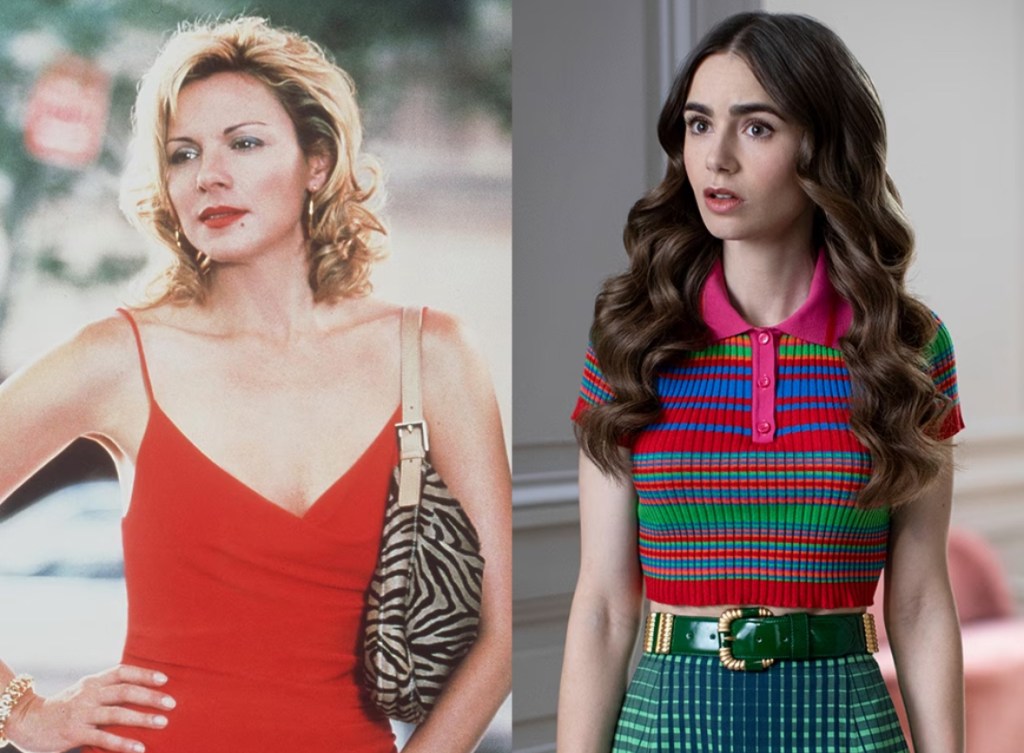
Some of these questions are explored in the iconic TV series Sex and the City, which, when launched in 1998, quickly soared in popularity and gained viewers all over the world, eager to follow the lives of four relatable girlfriends trying to navigate their careers, friendship, and love in the bustling New York City. All four characters live a pretty materialistic lifestyle, indulging themselves in shopping, posh brunches, and nights out at lavish bars or clubs. They’re all successful women with well-paying careers, financial independence, and, for the most part, single. Truly the embodiment of the modern woman. Carrie, the main character and the narrator of the story is a journalist who’s writing a column for a magazine where she shares her feminine take on male-female relationships in a big city. She has her eyes set on Mr. Big who exemplifies the so-called Mr. Right, the ultimate full package – he’s successful, rich, elegant, and most importantly, sexy. Next, we’ve got Miranda, a Harvard law graduate who frequently prioritizes her career over her love life. She’s seeking a relationship in which she can lay all the cards and be the one in control, contrary to what the traditional norms emulate. On the other hand, there’s Charlotte, a composed and responsible art dealer who’s simply looking for the great love of her life. She strongly believes in love at first sight and, unlike the other girls, fantasizes about building a big family someday – motherhood and true love being her two greatest fantasies. The last one of the pack is Samantha, the most liberated and sexually expressive of the whole four. She works in public relations and often uses her charms to get what she wants. She’s not interested in love as much as she’s interested in sex and one-time flings, which she utilizes to assert her dominance over powerful and attractive men. Though each one of these characters is different and has a distinct approach towards love, they all seem to have one thing in common – modern womanhood. They all break certain standards and norms regarding traditional femininity, and they all struggle to satisfy their own idea of “love,” though each one of them to a different extent.

While some people say that the iconic show promoted liberal feminism and a refreshing outlook on female sexuality, some also argue that it was quite trivial, perpetuating an unhealthy stereotype of women who glamorize consumerist culture. This seems to be an irresolvable debacle – can women who act like men, demonstrating their power through sex, money, etc; be thought of as feminist? And if they can, then how does love fit into this equation? Though on one hand, it may seem that love is what makes the characters vulnerable, on the other, it’s what really adds up to their image as modern women. Each girlfriend has their own vision of what they want from love as they navigate the multitude of choices available to them in the Big Apple. They each develop a certain “type” of man they’d like to date, and while finding him proves to be challenging and often requires adjusting their expectations, they never lower their standards. The modern woman does not passively wait for her Prince Charming – instead, she actively pursues her own destiny, boldly taking control of her romantic life. She may be single in a big city, but she is neither alone nor lonely. Surrounded by her girlfriends who share her struggles, she is reminded of the strength of sisterhood, which serves as a cornerstone of feminine life in a vibrant urban setting, such as New York City.

Twenty years may have passed since Sex and the City was released, but the dynamics of male-female relationships in the city haven’t changed much. Urban women continue to demonstrate sexual, personal, and occupational liberty, all while remaining just as invested in love. This is evident in the success of shows that, though often ridiculed for their triviality, become global hits because they resonate with audiences – especially female viewers – who see a part of themselves in this trope of a modern woman.  A recent example of this is the Netflix show Emily in Paris, which, despite being criticized as a “tacky ripoff” of Sex and the City, offers an entertaining glimpse into what the modern woman’s been up to for the last twenty years. Emily, the main character, is a 21st-century counterpart to Carrie Bradshaw. After being transferred from Chicago to Paris for work and breaking up with her American boyfriend, she embarks on a new chapter of her life in a city renowned for romance, wine, art, and fashion. She explores her taste in fashion as well as her taste in men, going on dates, being flirtatious, and embracing a more sexually liberated lifestyle – that’s until she finds her very own, Parisian Mr. Big, who suddenly becomes the focal point of all her romantic endeavors. Although her life seems increasingly centered around wanting an emotionally unavailable man, she appears to challenge her Mr. Big – not for the sake of changing him, but rather to explore what she truly wants to commit to. Despite the relationship’s unrealistic elements, such as the arbitrary lack of communication and the string of unlucky coincidences that are nothing but annoying, the story of Emily and her Mr. Big – much like that portrayed in Sex and the City – offers some insights into the link between femininity in a contemporary sense and love. Prioritizing love doesn’t necessarily have to make women vulnerable, and male-dependent. Women have the autonomy to decide what kind of male-female relationship they want to pursue, and thus, love can serve as a form of embracing liberty. A modern woman can be a Carrie Bradshaw or an Emily Cooper – someone who, almost from day one, embarks on a quest for Mr. Right. She could also be a Miranda, seeking a male-female partnership, or Charlotte, looking for the prospective father of her children. Alternatively, she might be like Samantha, preferring finite romantic connections over a traditional notion of love. On top of being largely independent in various aspects of her life, the modern woman can always rely on her girlfriends, since no place fosters such a strong sense of sisterhood quite like a big city.

Design a site like this with WordPress.com
Get started