Why does it seem so hard to find joy in the little things? To take delight in the mundane and the ordinary? Is it because of the societal expectations that pressure us to aim for the “extraordinary” in life? Or maybe it’s because we are simply wired this way – hating routine, and seeking excitement in novelty and change by default? In a culture that prioritizes quick dopamine rushes and instant gratification, we have become accustomed to seeking joy in momentary pleasures rather than appreciating the subtle joy that comes from familiarity and routine. As a result, we tend to overlook the beauty of everyday experiences, focusing on distant dreams and desires that seemingly enhance our lives – making them more interesting and meaningful – when in reality, they only raise our expectations, leading to bitter disappointment when the resulting joy proves to be insufficient and short-lived. The sole question remains – is it possible to be both extraordinary and content with the ordinary? Is it possible to live a fulfilling life and have, simultaneously, an appreciation for the little things?
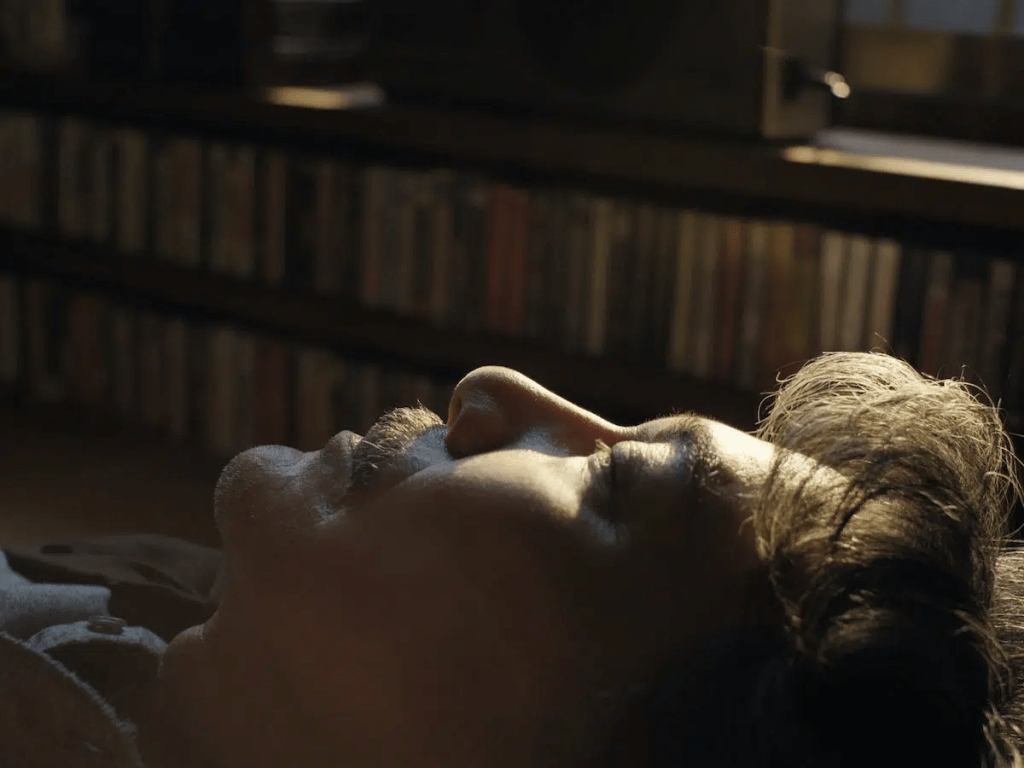
The eastern philosophy of minimalism argues that in order to fully appreciate the joy derived from the “extraordinary,” one must first learn to find joy in the “ordinary”. For decades, philosophies like Zen, Buddhism, and Taoism have emphasized simplicity, harmony, and mindfulness as key virtues in life – values that are supposed to guarantee inner peace and spiritual fulfillment in contrast to “external possessions” that, at the end of the day, remain useless. “Perfect days” is a movie that tells the story of ordinary life and the simple day-to-day joy that makes it so worth while. The Oscar-nominated film, directed by Wim Wenders in 2023, follows the story of Mr. Hirayama, a middle-aged man who lives alone in a small apartment in Tokyo. Day by day, he follows the same routine – he wakes up, swiftly folds his duvet into a neat cube, waters his plants, brushes his teeth, and dons his baggy work suit. He then steps out on the porch, looks up, smiles, and with that one silent gaze upwards, you just know that he’s about to have a perfect day. Throughout the entirety of the film, the protagonist doesn’t speak much. As a result, the audience is left to base their perception of Mr. Hirayama on what other characters say about him. “That’s Hirayama, my senior at work. Great worker, but not a great speaker. I don’t even know his voice!” – says Takashi, his co-worker. “Hirayama, you really like this job, huh?” – he once asks – How can you put so much into a job like this?”. “Not that I’m expecting an answer,” – he adds swiftly when met with silence. Takashi’s question reflects the unique relationship our protagonist has with his job – he brings his own set of cleaning gadgets and ensures a high quality of his service, leaving no dirty spot behind. What’s more, he treats the people who come to use the toilets with utmost respect, always waiting outside of the toilet instead of just waiting outside the used cabin. Although the people around him don’t pay much attention to Mr. Hirayama, he seems to ignore it, focusing on other things like nature or different “odd” people who also seem to be “not worthy” of the societal gaze. He makes regular eye-contact with a local homeless man in the park, greating him with respect. Also, every day at the same time after working hours, he sits on the same bench in the park overlooking the trees and takes out his film camera to take a photo. The objects of his photos appear later in his dreams, playing an important role in crafting the story line, and reflecting the unique mentality of our main character. Each day follows the same pattern – Mr. Hirayama goes to work, then he heads to the park to admire the trees and take photos, only to dream about them late at night and return to these very dreams the next day. He doesn’t dream about the great things he could have become or the impressive places he could have found himself in. Instead, he dreams about the moments of his everyday life that made him feel truly blessed and happy. He doesn’t need to travel far away in his sleep, as everything that brings him joy is right here.
Although Mr. Hirayama seems to be completely unbothered by other people’s opinion about him, feeling completely fulfilled and happy with his solitary way of life, there are moments throughout the film when the protagonist is confronted. One such moment occurs when the protagonist finds a small child crying in the bathroom, having lost his mother. He takes the child to search for the lost guardian, but upon finding the mother, he is met with scolding looks. Mr. Hirayama must keep a straight face while the mom wipes her child’s hands with a handkerchief and quickly drags her offspring away, as if trying to protect it from something “dirty” and “contagious”. Another instance is when the audience gets to witness the main character’s interaction with his sister – “Are you really cleaning toilets?” – she says, with a pitiful, yet uncomfortable look, as if genuinely wondering why someone would be at ease with such a “disgraceful” job. At such moments, it becomes apparent to the viewer that Hirayama is aware of his low social status and ordinary life, which contradicts societal expectations. Society anticipates individuals to lead a successful life filled with unpredictability and constant challenges to oneself. Wealth, success, reputation – these are the things that one should dream about at night.
There are certain people, however, on his path who see the real value of Mr. Hirayama’s unique way of living. One such person is the ex-husband of the female bar owner, with whom our protagonist seems to have a platonic relationship. The ex-husband approaches our main character and engages in a seemingly random conversation, only to eventually say, “Please take care of her,” after explaining that he suffers from cancer. To which Hirayama replies, “Oh no, we’re not like that.” “I’m counting on you,” is heard in response. The two men, who are complete strangers meeting for the first time, then proceed to talk about seemingly most ordinary things, as if breaching the decorum mandated by the situation – “Shadows …Do they get darker when they overlap?”. “Not sure.” – Hirayama replies. Consequently, the characters proceed to play around with their shadows, checking whether the hypothesis is true – “Try standing here. What do you see?”. “Looks the same to me,” replies the latter. “Not getting darker?” – the protagonist asks. “Probably not.” “Looks darker to me.” – he responds. “Don’t see any difference.” “But there is! It has to get darker to make sense!” – he exclaims – “Nothing is changing after all? That’s just nonsense.” This conversation gives the audience a glimpse into Mr. Hirayama’s outlook on everyday life. In this analogy, his days are like the shadows – although they initially all seem the same, their “overlap” should reveal some changes over time. According to our protagonist, each day has something new to hold, despite life’s routineness and monotony. Like a photo of the same tree taken taken over and over again, day by day, that somehow manages to look different every time – maybe it’s the light, or the wind blowing in a new direction, or maybe it’s just a state of mind? However, to Mr. Hirayama’s surprise, the metaphorical “shadows” don’t seem to overlap. In the very last scene of the movie, we see the main character driving in his car to work per usual. Yet, this time, we get a close-up on his face – revealing a complex expression that fluctuates between a smile and a look of pain. In the meantime, short bursts of sunlight and shadows play across his face, as if reflecting the emotional depth of the scene. At this moment, we witness negative emotions taking over Mr. Hirayama’s body for the first time. The pain of “perfect days” becomes apparent. In order to take joy in everyday life, the main character strives to live each day in the present, disconnecting from the idea of the past or the future. “Now is now. Next time is next time,” as he puts it. To live in the present, one must give up on the past and future. Perhaps that’s why Hirayama doesn’t try to salvage his relationship with his sister or pursue a new one with the bar owner. That’s the prize he has to pay.
“Perfect Days,” while celebrating the joy of ordinary life, also portrays the hardships that make the seemingly simple living not so simple. The protagonist’s secret to a satisfactory life does not solely lie in the harmony of repetition and the comfort of a familiar routine, but also in coming to terms with the pain of being unable to bridge the gap between the past, present and future. The final scene of the film illustrates, however, that these moments of joy and despair are closely intertwined, and much like light and shadow, they seem to come and go. Perfect days are filled with fleeting moments of “light” and “shadow” – joy and pain – happening one after the other, both coming and going. Hirayama finds joy in the simple moments of his daily life – from waking up each morning, to serving the public, and to appreciating the beauty of the natural world around him. That doesn’t shield him from anxiety and pain. But as the day draws to a close and the “shadows” take over, he finds solace in a smile, reminding himself that “now is now” and “next time is next time.”
 Let's Rewind