Over the past century, the political landscape of the United States has undergone some drastic changes, giving rise to the deeply polarized country we see today. Despite the liberal movement that ensued in recent years across the states, certain regions remained largely unaffected by these socio-political changes. Southern America, the region once regarded as the “Solid South”, continues to hold the image of the “stronghold” of conservative and traditionalist ideals, with the largest community of right-winged Americans. This distinct division between the liberal North and conservative South, as one can imagine, is not a recent phenomenon – but something that inevitably emerged in response to the isolation of northernmost and southernmost parts of the country, and the unique geopolitical situation they found themselves in.
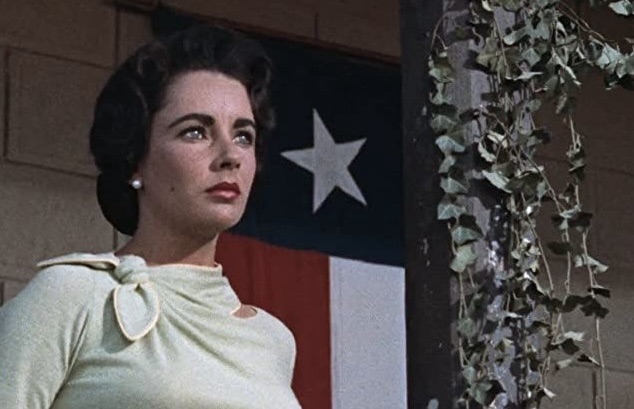
One particularly interesting state has been often reffered to when exploring the theme of “Conservative America”. Texas. The second biggest state – the size of France – home to the American cowboys, rodeo, and barbecue, and a neighbour to Mexico. The politics of this state being pretty much ingrained in its culture and history. It’s been frequently portrayed in literature and film, one of them being the 1956 film “Giant,” featuring Rock Hudson, Elizabeth Taylor, and James Dean. The movie is set in the mid-1920s, telling the story of a wealthy Texas rancher Jordan “Bick” Benedict Jr., who travels to Maryland to purchase a horse. Upon his arrival he meets Leslie, a charming socialite who immediately captures his attention. Visibly intrigued by the wealthy rancher, Leslie strives to make an impression and delves into compulsive reading about Texas. Bick instantly strikes the audience as a “proud Texan” – he describes his home state as his “country,” refers with sentiment to his ranch, Reata, and proudly mentions the vast quantity of acres he owns. Leslie, on the other hand, comes across as free-spirited and bold – she poses straightforward questions, and is not afraid to speak her mind. More notably, she appears to be quite sensitive towards social welfare, expressing empathy and sympathy for those unfairly treated. She questions Bick about his perspective on whether he sees it as “sad” that all this land, referring to Texas, was taken away from Mexicans – alluding to the historical period when Texas declared independence from Mexico, establishing itself as a sovereign nation, which existed independently for nearly a decade before joining the United States. Bick’s reaction to the question is filled with astonishment and disdain, as he refers to her words as nothing but “hurtful” and “absurd”. In the very beginning, the movie accentuates a stark contrast between the perspectives of a Northerner and a Southerner, exposing that ethos of independence and state pride that seems to be deeply embedded in the Texan psyche. Despite the differences in character and worldview, the chemistry between Leslie and Bick swiftly brings them closer together, initiating a relationship that rapidly evolves into marriage. As a happily married couple, they head to Reata, Bick’s ranch – which, for Leslie, means adapting to an entirely new reality. From the moment Leslie sets foot in Texas, she noticeably distinguishes herself from the locals by showing kindness towards the Mexican working class, introducing herself to the maids, drivers, etc. This draws the attention and scrutiny of other Texans, who appear to be vividly concerned about her lack of restraints and understanding of her social status. Bick argues with his wife, stating that someone of her “kind” shouldn’t engage with “such people”. Despite her husband’s objections, Leslie continues to visit impoverished Mexican settlements near the ranch, unable to turn a blind eye to the despair of others. The Texas she was met with is not what she anticipated – it’s a world marked by inequality, social divisions, and male dominance, as she’s about to find out.
When she attempts to join a political conversation between Bick and his colleagues, she’s promptly excused from the room – “You’d be bored, honey. This is dull. We’re talking about politics.” Unaware of the pretext, Leslie persists, stating, “Why, I’d be fascinated! Please go on talking. I’d love it.” “This is men’s stuff, men’s stuff!” – Bick firmly responds, before one of his colleagues adds sweetly – “Don’t you go worrying your pretty little head about politics.” “You mean my pretty, empty head, don’t you? You gentlemen date back 100,000 years! You ought to be wearing leopard skins and carrying clubs… What’s so masculine about a conversation that a woman can’t enter into it?” – she retorts. Suddenly, her socialite upbringing and education don’t mean much in the face of the traditionalist gender norms in the 1920s South.
The argument between the couple concludes with Leslie apologizing, and Bick asserting his dominance in marriage by clarifying – “Everything that has a Reata brand is run by me. That’s the way my father ran this outfit and my grandfather, too. He kept it together for his son, and my father for his. And I’m keeping it together for mine.” This obsession with land as a family legacy is a recurrent theme in the movie, which is showcased by Bick’s character whose whole purpose seems to come down to upholding traditional norms and ensuring that the family name endures lives on. His traditionalist value system is gradually challenged as the story progresses and he grows older, witnessing his kids maturing and the world around him – changing. One of the subplots that contribute to these changes involves Jett Rink, once a laborer on Bick’s Reata. Upon a deceased family member’s wishes, Jett inherits a portion of the land — the family legacy — and stumbles upon oil on his plot. Gradually we watch the land around Reata being filled with drillers and tanks of the “Jett Rink Company”, which deeply disturbs Bick, as the mere prospect of his ranch being exploited for oil poses a threat of losing the family legacy – the brand behind the Benedict name. Initially, Bick firmly rejects the very notion of selling his land for oil drilling, however, as persistent pressure mounts from the inevitable realization that none of his kids harbor any interest in inheriting the family ranch, Bick eventually gives up and decides to sell Reata. Later on, we see him – once a rancher, a Texan cowboy – now lounging beside his own pool – a wealthy businessman – solemnly reaching the conclusion that “oil or no oil – it doesn’t matter anymore”. Bick’s fate reflects that of numerous Texans who underwent a profound change, shifting from ranchers to entrepreneurs amid the economic boom of the 1900s in Texas. The land, once a tangible aspect of the Texan identity, lost its significance as the American dollar emerged to take its place.
Ironically, instead of cultivating the family traditions and adhering to their father’s conservative views, Bick’s children end up ignoring his expectations and forging their own path for themselves – his daughter, Luz, fleeing to Hollywood to become an actress, and his only son, Jordan, marrying a Mexican girl in secret. The Benedict name gradually losing its “prestige” along with the remnants of its once-high status. An argument breaks out after Jordan’s wife is refused service at a beauty parlor, which just so happens to be owned by Jett Rink. After his son’s failed attempt at confronting Jett, Bick decides to take matters into his own hands, dragging Jett “outside” for a fight. Nevertheless, this doesn’t stop an argument from ensuing between Bick and his son. “Who went after Rink? Your old man.” – states Bick demanding respect. “And why?” – asks Jordan angrily – “Because of my wife? Because your son, Jordan Benedict… a descendant of the long, proud line of Reata… got knocked flat on his back in front of all Texas. That’s why!”.
The narrative reaches a climax the following day as Bick and Leslie, trying to reconcile and repair the rift caused by previous events, decide to take Jordan’s wife and their grandchild to a diner, where the staff seems to be looking disapprovingly at the Mexican customers. Bick oblivious to the whole situation doesn’t see the innuendo behind the staff’s scranched-up faces. When he notices a Mexican family at the next table being aggressively thrown out of the restaurant by the waiter, Bick suddenly erupts and attacks the aggressor. Joyful Texan music starts playing in the background, as the two men fight and true chaos ensues – tables are flying, glass is breaking, blood mingling with ketchup. The comic scene reaches an end as the waiter hurls Bick onto a table, causing a salad to collapse on his face. Bick lies there, defeated, while the waiter seizes a sign from the wall – the inscription reading “We reserve the right to refuse service to anyone” – and flings it onto Bick’s ketchup-smeared chest. In the movie’s final scene, we observe Bick sitting miserably in his wife’s arms, declaring, “I’m a failure. Nothing has turned out like I had planned.” To which, after a brief silence, she responds with words – “Do you want to know something? You know all that fine riding you used to do, and all that fancy roping… and all that glamour stuff you did to dazzle me? It was impressive. But none of it ever made you quite as big a man to me, as you were on the floor of Sarge’s hamburger joint… When you landed crashing into that pile of dirty dishes… You wound up on the floor, on your back, in the middle of the salad, and I said to myself: ‘after 100 year the Benedict family is a real big success.'”.
The story of the Benedict family portrayed in “Giant” is in reality the story of Texas itself. Bick undergoes significant character development and a worldview crisis, eventually forced to reevaluate his values and beliefs. He comes to the realization that the bygone era of Western cowboy culture is no more. The times have changed, and so has the land. While his conservative views may have been challenged by the rise of individualism and liberalism, they weren’t entirely replaced or overthrown. In the diner scene, Bick transcends his prejudices in the name of a greater ideal. He ultimately manages to preserve the family name and honor by standing up for the family of someone else’s. Texas had grappled with similar obstacles, brought about by economic, cultural, and societal changes. Its history with immigrants, oil, and capitalism culture following the economic boom, all painted the picture of the conservative South we know today. While the prevailing political ideology of the South remains largely the same, the people themselves have changed, and evolved, consequently transforming the landscape of conservative politics. Its story serves as a reminder that conservatism is not all about land, radicalism, and strict principles. It’s about striving for balance between preserving what’s valuable and embracing the inevitable forces of change.
 Let's Rewind