As Oscar Wilde once put it, “The truth is rarely pure and never simple”. It stands as an ongoing dilemma – whether it’s better to know the “whole truth”, no matter how hard it might be, or live in a lie, unharmed by the viciousness of reality. Some say “ignorance is bliss”, while others maintain that “the truth will set you free”. Ultimately, it all comes down to whether one accepts the comfort of not knowing, or whether one takes the risk of losing it in the pursuit of truth.
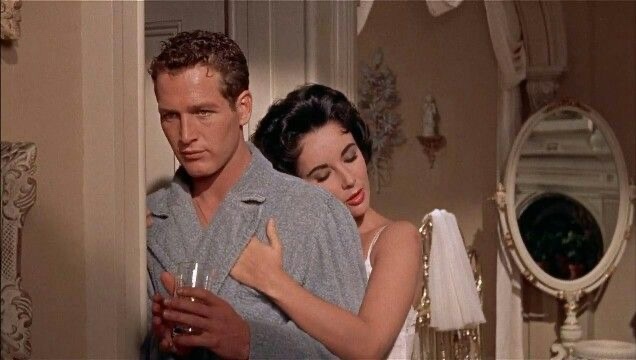
These two contradictory uptakes on the idea of truth are the central topic that the movie “Cat on a Hot Tin Roof” encapsulates. The classic of cinema, based on a play by Tennessee Williams, contemplates the two-faced nature of truth that’s painful and nerve-wracking, but when kept hidden for too long, resurfaces with increased strength, bringing out the worst in the character – the filthiest of all flaws, and the darkest of desires. The plot revolves around a wealthy Southern family, gathering home at the Mississippi plantation to celebrate the birthday of “Big Daddy’s” – the head of the family. One of the very first people the audience is introduced to is Gooper (Big Daddy’s son) and Mae, or “Sister Woman”, as often referred to by the patriarch. They’re portrayed as the “conventional couple” – with multiple, “well-fed” children, with Gooper being a successful lawyer, and Mae playing the role of a devoted mother and wife. This image of a perfect American couple is contrasted against the not-so-perfect, crumbling marriage of Maggie and Brick (Big Daddy’s second son). In an attempt to fool others, along with herself, Maggie desperately tries to play the part of the loving, “trophy” wife by talking about having children soon and by cozying up to the “birthday man”, who’s vividly charmed by her demeanor. In reality, she despises kids and is having a tough time with her husband – a depressed alcoholic who’s mourning the recent death of his best friend, Skipper. Brick seeks to distance himself from Maggie, feeling put off by her refusal to acknowledge and confront the harsh reality of their troubled relationship. He tries to drown his sorrows in liquor and doesn’t show up to the birthday party, finding himself unable to face the facade of his seemingly perfect American family.
Big Daddy, however, seems to weary of the charade as he rejects his family’s grand gestures and attempts to keep him entertained. Instead, he spends the rest of the night trying to make amends with his troubled son, Brick, seeking to find the root of his drinking problem. “Why do you drink?” – Big Daddy asks him. “Disgust!” – he exclaims, emotional and hopeless, as he breaks down in front of his father. “Disgust with what?!” his father presses, to which he responds simply, “Mendacity.”
As Brick gradually reveals that the reason for his drinking lies in Skipper’s suicide, which he believes he could have prevented, his father confronts him with words – “You didn’t kill Skipper, he killed himself! (…) Mendacity! You won’t live with mendacity but you’re an expert at it. The truth is pain and sweat… and paying bills and making love to a woman that you don’t love anymore! Truth is dreams that don’t come true, and nobody prints your name in the paper till you die…” This pivotal scene marks Brick’s moment of revelation when he becomes truly aware of his self-deception. His disgust with mendacity is a reflection of his deep-rooted disgust with himself – with what he’s become.
First cracks in the picture of the perfect family begin to show, when the real motive for the orchestrated birthday party turns out to be a sole cover-up, meant to conceal the hidden truth about Big Daddy’s declining health – an opportunity for some to curry favor with the dying patriarch and inherit a part of his legacy. “What’s that smell in this room? Didn’t you notice it, Brick? Didn’t you notice a powerful and obnoxious odor of mendacity in this room? There ain’t nothin’ more powerful than the odor of mendacity. You can smell it. It smells like death” – declares Big Daddy as he solemnly walks into the room, looking down on his relatives’ faces. The tension grows as the true motifs behind Gooper’s and Mae’s act of playing the seemingly perfect couple in front of his father emerge from the shadows – “You said I never loved Big Daddy. How would you know? How would he know? Did he ever let anybody love him? It was always Brick, always. (…) Dad wanted me to become a lawyer. I became a lawyer. he said to get married, I got married. He said to have kids, I had kids. he said to live in Memphis, I lived in Memphis. Whatever he said to do, I did.” The theme of mendacity resurfaces once more, laying bare the bottled-up frustration of striving to meet paternal expectations.
The story ends with Maggie announcing that she is with a child, to which Mae, Gooper’s wife, responds by accusing her of lying. Brick backs up Maggie in her claim, and the two depart together to their room. “Maggie, I’m through with lies and liars in this house,” Brick says to Maggie, as he instructs her to lock the door, symbolically marking the start of a new chapter in the couple’s life – a closure to the era of deceit and a conscious embrace of truth.
In “Cat on a Hot Tin Roof”, mendacity plays a central role in the characters’ portrayal. It is hidden in the way they talk, the way they look, and the way they smell. It follows them every step of the way, and when any of them tries to escape it, they come to the striking realization that they can’t. In the plot, mendacity takes on many forms – some of the characters are not aware of their own deceit, since they’re lying to themselves. Brick deceits himself by seeking to escape his problems with alcohol, yet the more emotionally numb and distant he becomes, the stronger the underlying pain, and the urge to reveal his innermost regrets. For Gooper, it’s the belief that by rising to meet societal expectations and establishing himself an image worthy of his father’s respect, he can secure a stable and successful position, coveted by many. In reality, his efforts prove futile, as they appear meaningless in his father’s eyes. Mendacity lies right at the core of the protagonist family which is disintegrated, broken, and filled with deceit. It asserts its presence so strongly that it surrounds the characters like an “obnoxious odor,” akin to the smell of death. Its rotten scent hovers above the characters, haunting them, reminding them that their truth, buried deep within, seeks to get out. At last, Brick decides to back up Maggie in her lie, transforming it into a new truth. The deadly smell of mendacity slowly recedes, as the faint scent of life begins to emerge.
 Let's Rewind