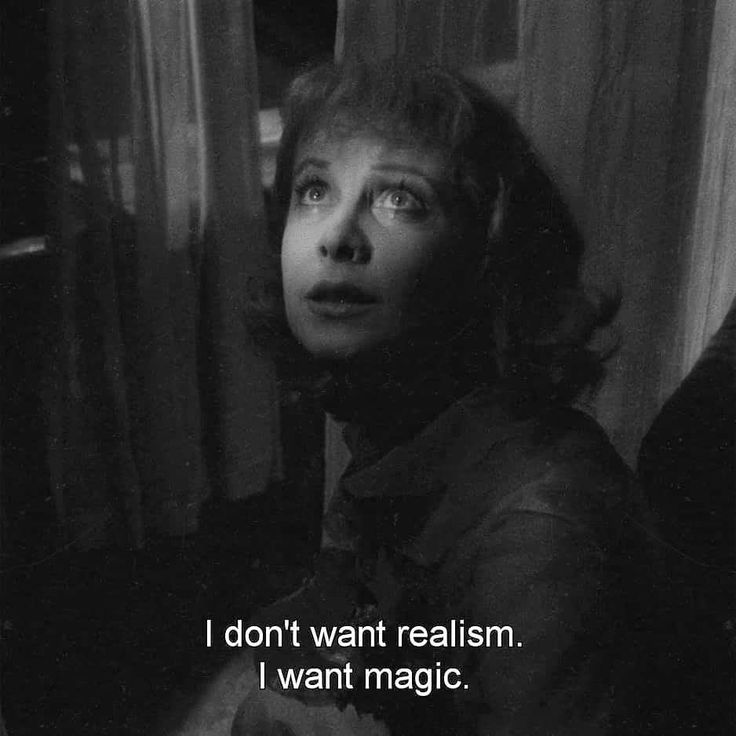
A story can be told in numerous ways. Through the sparkle in the main character’s eyes, through shadows that linger in the background, casting shapes on people’s faces – through the subtle interplay of light and darkness that navigates the plot, gradually revealing some truths while concealing others. “A Streetcar Named Desire,” based on a play by Tennessee Williams, is movie in which light plays a vital role, serving as the narrator of the story, who ultimately decides what should be revealed and what kept hidden.
Light introduces the characters, illuminating their physical features, facial expressions, and the emotions that seem to lie underneath. The protagonist, Blanche du Bois, played by Vivien Leigh, is initially portrayed in dim lighting of her sister’s shabby New Orleans apartment, to which she moved upon trying to escape the haunting “shadows” of her past. When we first meet Blanche, we attain the impression that she’s a delicate and elegant woman, which is acentuated by her reserved, classy demeanor and her fine attire. As soon as she enters the apartment, she expresses disdain and discomfort, as the protagonist’s new home fails to reach her standards and expectations – “What kind of bed’s this – one of those collapsible things?,” says Blanche, referring to her newly assigned bed. She also appears to be very subconcious about her appearance, paying extra attention to her looks – dressing in fur coats and tiaras, bathing for hours, and avoiding to be seen in the glare of light. “Admire her dress and tell her she’s looking wonderful. That’s important with Blanche. Her little weakness!” says Stella on multiple occassions, revealing the vulnerability in her sister’s desire to uphold the fleeting illussion of youth and beauty – the weekness she’s anxious to conceal with refined accessories and shadow.
The dim lighting surrounding Blanche casts a mysterious shadow over her character – a mystery that Stanley, Stella’s husband, is determined to uncover. Stanley’s character is introduced as a dominant and assertive figure, marked by his strong, athletic physique that accentuates his manly presence. Contrary to the portrayal of the protagonist, Stanley doesn’t shy away from the light. Instead, he constantly finds himself at its center – confident, vulgar, and unfazed by the exposure of the brutal truth. Blanche feels threatened by her sister’s husband and keeps persuading Stella that her feelings for him are not rooted in love but in mere desire for the forbidden, rough and upredictable – “What you’re talking about is desire, just brutal desire. The name of that rattletrap that bangs through the Quarter. […] It brought me here. Where I’m not wanted, where I’m ashamed to be”. While trying to escape Stanley’s interrogation, Blanche finds herself fighting some demons from the past. This leads her to open up to Stanley’s colleague, Mitch who happens to be a courteous, elegant man – different from her sister’s vulgar husband and his poker-buddies.
Light is a crucial aspect of Blanche and Mitch’s first meeting, as it brings them closer together, revealing their vulnerabilities and underlying desires. “I can’t stand a naked light bulb any more than I can a vulgar action,” she declares as she hands him a paper Chinese lantern to veil the sole bare light bulb in the room. “Look we’ve made enchantement!,” she exclaims as they start waltzing around the dimly lit room. The naked light bulb in this scene serves as one of the many symbols, representing Blanche’s aproach to life, and her perpetual desire to glamorize it. The rough, naked, and radiant light exposes everything with great clarity, leaving little room to imagination. Once it’s concealed however with a pretty package, it distorts the unfiltered, authentic image, crafting the desired illusion of reality. Desire is what lies at the core of Mitch’s and Blanche’s relationship, growing more potent as their perspectives become increasingly distorted – Mitch feels drawn to the mystical allure of the protagonist, which allows him to craft his own vision of her in his head.
Complications arise when Stanley successfully uncovers the entire truth about Blanche’s past and shares this revelation with Mitch and Stella. Mitch, in fury, decides to confront Blanche, trying to regain the boundary between reality and illusion once and for all. “It’s dark in here,” he says. “I like dark. The dark is comforting to me,” she responds. “I’ve never seen you in the light. […] I’ve never had a real good look at you,” states Mitch angrily as he comes to the realization, and consequently, smashes the paper lantern and turns the exposed light bulb on. Blanche trying to hide away from the scrutinizing light, fails to escape Mitch’s interrogating gaze – he grabs her face, trying to recognize where the vanishing illusion has gone.
A culminating moment unfolds when Stanley himself confronts Blanche, exposing her dirty lies and secrets with contempt – “Look at yourself! In a worn-out Mardi Gras outfit, rented for 50 cents from some rag picker! And with your crazy crown on! What kind of queen do you think you are?! […] I’ve been onto you from the start! You come in here and you sprinkle the place with powder and you spray perfume, and cover the light bulb with a paper lantern!” Stanley, driven by the desire to assert his dominance and preserve his authority, launches an attack on Blanche, aiming to humiliate her and destroy the remnants of her fading illusion. The shadows fade away, and give way to the new, rough light – no more paper lanterns.
The symbolic significance of light in “A Streetcar Named Desire” reveals its multifaceted nature, as the driving force behind the narrative. It reflects the characters’ innermost desires, and the accompanying fear of them being brought into light, laid bare for all to see. For Blanche, the glaring, bright light she tried to avoid, symbolizes the unveiling of the painful truth that causes all the vulnerabilities, mistakes, and traumas from the past to resurface. The soft dim light allowed her to break free from the haunting pain, to perpetuate the desire of remaining the joyful, beautiful and delicate woman she once was, unharmed by the ugly truths of life – by the brutal reality of things passing, not lasting forever. The “light play”, present throughout the film, especially in the two pivotal scenes where the protagonist is confronted by other characters driven by their personal desires for truth, exposes the inner struggles of a person trapped between two different realms – of dream and reality. Concealing tears behind a smile and replacing a bare lightbulb with a paper lantern, Blanche tried to cling to the fragments of the past that brought her genuine joy. Yet, it proved to be a one-way street without a route back—a streetcar named desire, headed nowhere.
 Let's Rewind