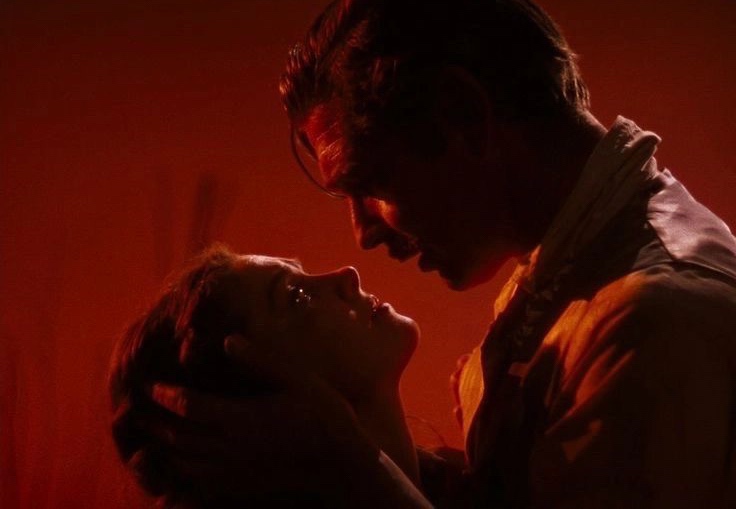
“What is love?” is a question posed by many. We all experience it at some point in our lives. It’s a universal emotion that transcends cultural, linguistic, and generational barriers. No matter who you are and where you live, you can recognize it immediately – the butterflies in the stomach, the quickening heartbeat, the “electricity” – it’s all part of the same package. Yet, despite our shared perception of how it generally feels, we seem to understand love differently. Some associate it specifically with people, and their romantic affection for one another, while others view it on a broader spectrum, linking love to the inner appreciation for higher ideals such as faith or patriotism, deeply rooted in one’s sense of being.
Thus, love can take many forms, making our search for it a bit confusing. Some emotions may feel like love and look like love, while in reality, they aren’t. As a result, we find ourselves running in circles, blindsided, trying to deduce what’s true and what’s not. This is, in part, a product of the ongoing “idealization of love” which has set unrealistic standards, leading on generations of miserable and hopeless romantics. In movies, love was often portrayed in its simplistic form – I’m talking about the predictable, fulfilled, and rational kind of love that reaches a happy ending and wins against all odds. Though it may seem appealing or intoxicating, it has nothing on the intricate, irrational love that comes unexpectedly. There’s some inexplicable beauty in this rough, unfiltered emotion that showcases the true complexity of our human nature and the innate desire to “love and be loved”. Certain movies explore this theme, serving as truth excavators that cause us to pause and reflect for a while, often reshaping our perception of love.
“Gone with the Wind” is a classic from the 1930s that debunked love’s conventional image by telling the story of a young woman who fell hopelessly in love with a “taken” man. Scarlett O’Hara, starring Vivien Leigh, is introduced as a charming and charismatic “coquette” who effortlessly draws the attention of both men and women, quickly learning how to use it for her own advantage. Scarlett is a character unlike any other. Being the “desirable” daughter of a wealthy plantation owner, she knows how to utilize her power – she knows what she wants and she most certainly knows how to get it. She’s both determined and skilled at achieving her goals, even if it means flirting with men in relationships or risking coming across as “daring”. Nonetheless, it quickly becomes apparent that there is one particular vulnerability in Scarlett’s flirtatious demeanor. She’s in love with Ashley Wilkes – the one man she knows she could never have. Despite openely declaring her love to Ashley, he doesn’t reciprocate her feelings, leaving Scarlett with a sense of futile hope for the future. Her sorrow only deepens as the Civil War unfolds, and the man of her dreams departs for the southern front. The only person who’s aware of Scarlett’s secret feelings happens to be a wealthy Southern gentelman named Rhett Butler, played by Clark Gable. The moment he lays his eyes on the protagonist, he firmly decides to win her heart and aid Scarlett in “recovering” from her unrequited love for Ashley. Rhett sees a part of himself in Scarlett – she’s stubborn, confident, rich, and determined to get what she wants at all costs. “We’re very much alike my dear” he says to her. After the breakout of the war, Rhett professes his feelings for Scarlett and then too departs for the southern front. As the young, courageous woman she was, she takes charge of her family land, the beloved “Tara,” and sets out to confront her own “battles”. Facing a multitude of challenges, from her father’s death to a Yankee attack, Scarlett undergoes personal growth, eventually emerging as a mature, self-aware woman. After her father’s passing she decides to take special care of Tara, continuing her family’s legacy. “As God is my witness, I’ll never be hungry again”, she cries out, standing in the midst of the field. Despite all these hardships and her personal growth, Scarlett continues to hold onto the belief that Ashley will stand by her side one day, in Tara, once the Civil War comes to an end. Striving for that utopia, she loses Rhett – the only person who truly saw Scarlett beyond the rich, flirtatious persona she was known for in the higher circles. Moreover, she loses her idealized image of Ashley when he eventually confronts her, stating, “You’re so brutal to those who love you, Scarlett. You take their love and hold it over their heads like a whip.” At this very moment, she realizes that the feelings she felt for Ashley were just an illussion. She wanted for someone to love her truly, someone willing to make sacrifices on her behalf, someone who would dedicate their entire life to her. She yearned for the profound, romantic love of life-long commitments and sacrifices, and at the end she was left with none.
As she realizes that she made the wrong choice, she decides to return back to Tara – “Tara! Home. I’ll go home. And I’ll think of some way to get him back!”, she exclaims, as it dawns on her that Rhett Butler, the man she had left behind, was the one who truly loved her, just as much as she had thought to love Ashley.
“Gone with the wind” is a beautiful story that reveals different forms from which love emerges. It touches on the subjects of fatal love (the one that’s doomed from the very beginning), romantic love (the oned that’s often blind and results in a tragic ending), and the true love (the one that remains there against all odds, and never fades away). Some might say that the film ends in a very unambiguous way, revealing who Scarlett O’Hara truly loved from the start. Yet, to me the final words we hear from Scarlett are always striking. “Tara! Home. I’ll go home.”
The last thing that remains for Scarlett is Tara. It’s the place she promised to protect during the war, to take special care of it, and in the end, it takes care of her. After all, Tara was a part of her identity all along – it was a symbol of who she was, what she achieved, what she hoped to cultivate. Hence, when someone asks me, “Who do you think was Scarlett’s true love?” I simply say, “Tara.”
 Let's Rewind